
Pilots Who Trust Brinton Vision
LASIK and vision correction for pilots
Pilots rely on clear, stable vision in demanding visual environments. Brinton Vision helps pilots explore LASIK, PRK, SMILE, RLE/CLR, EVO ICL, and related vision correction options through a detailed, personalized evaluation.
Featured Patient
Steve U

Pilot | Ladue, MO | CLR – 2026
Courtney S
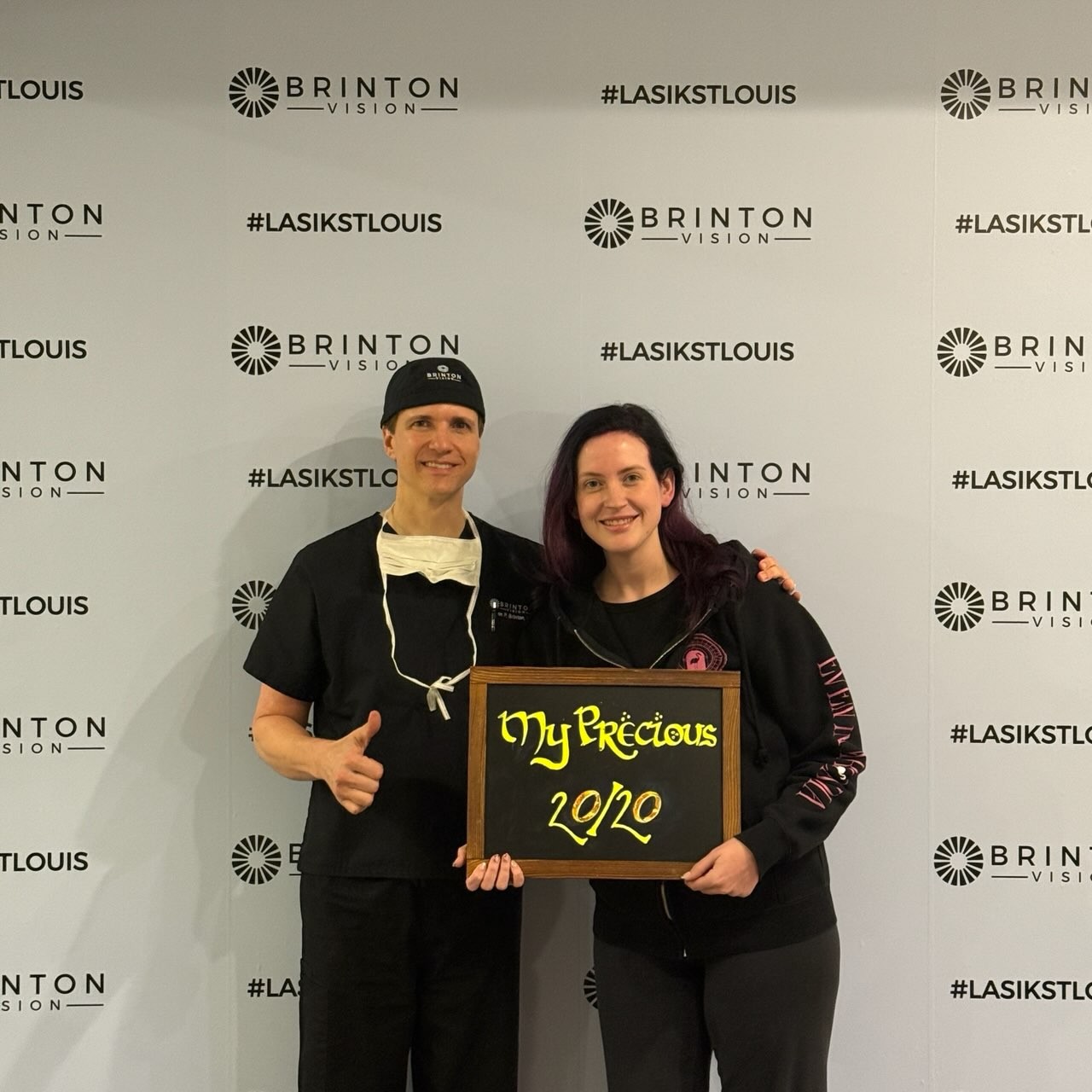
Pilot | Program Manager, Boeing | Alton, IL | SBK – 2026
Suzanne H

Pilot | United Airlines | St Louis, MO | SBK – 2026
Thomas H
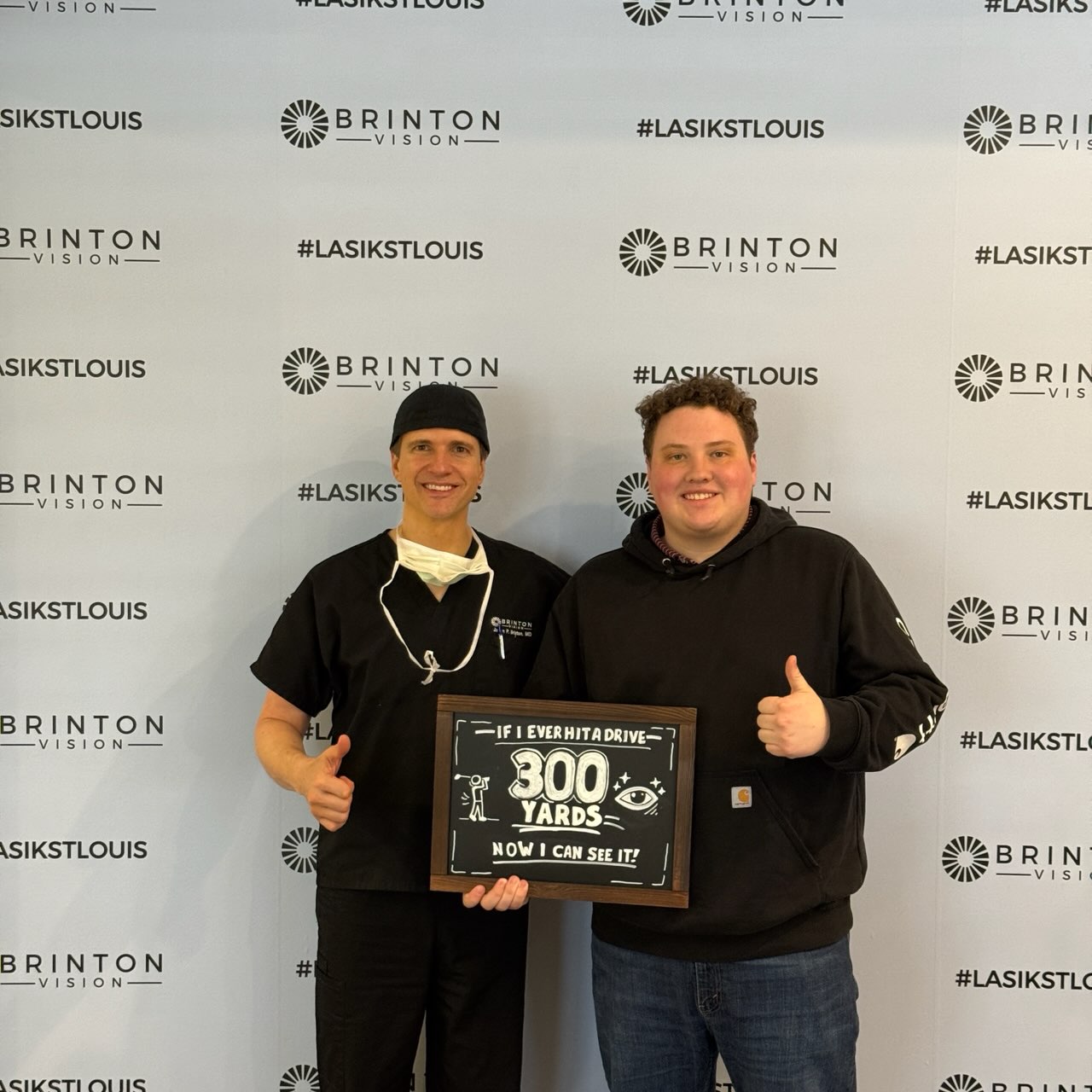
Pilot | Warrenton, MO | SBK – 2026
Executive Summary
FAA considerations after vision correction surgery
The FAA does not categorically disqualify pilots solely because they have had vision correction surgery. Across FAA materials, the recurring requirements are stable postoperative vision, no significant adverse effects or complications, no flight-relevant visual symptoms, and meeting the vision standards for the medical certificate class applied for.
The FAA specifically flags glare, halos, loss of contrast sensitivity, poor night vision, haze, night glare, corneal scarring or opacities, and variable or worsening vision as concerns that may be incompatible with flying duties.
Pilots should coordinate with their Aviation Medical Examiner before surgery and should not resume flying until the treating clinician determines the postoperative condition has stabilized, there are no significant adverse effects or complications, and FAA vision standards are met.
Important note for pilots
This page is educational and is not legal, medical, or FAA certification advice. Individual eligibility, documentation needs, AME review, FAA review, Special Issuance considerations, and return-to-flight timing depend on the procedure, healing status, symptoms, medical certificate class, and individual findings.
Medical Certificate Standards
FAA vision standards differ by medical certificate class
FAA standards differ by medical certificate class. These are medical certificate classes, not separate pilot certificates, but they map roughly to Airline Transport Pilot / First Class, commercial / Second Class, and private / Third Class operations.
If corrective lenses are still required after surgery, FAA limitation 102 is: “Must use corrective lens(es) to meet vision standards at all required distances.”
| FAA medical class | Common pilot use | Distant vision | Near vision | Intermediate vision |
|---|---|---|---|---|
| First Class | Airline Transport Pilot / ATP privileges | 20/20 or better in each eye separately, with or without correction. | 20/40 or better in each eye separately at 16 inches. | 20/40 or better in each eye separately at 32 inches if age 50 or older. |
| Second Class | Commercial pilot privileges | 20/20 or better in each eye separately, with or without correction. | 20/40 or better in each eye separately at 16 inches. | 20/40 or better in each eye separately at 32 inches if age 50 or older. |
| Third Class | Private pilot / lower medical privileges | 20/40 or better in each eye separately, with or without correction. | 20/40 or better in each eye separately at 16 inches. | No intermediate-vision requirement listed in the summary. |
Procedure-by-Procedure FAA Status
How FAA materials treat common vision correction procedures
Different procedures can involve different recovery periods, documentation pathways, and deferral triggers. Pilots should discuss their intended procedure with their treating clinician and Aviation Medical Examiner before surgery.
| Procedure | FAA posture | Minimum recovery / timing | Main restrictions and deferral triggers |
|---|---|---|---|
| LASIK / SBK / wavefront-guided LASIK | FAA accepts FDA-approved LASIK procedures for visual acuity correction; FAA refractive-surgery disposition table is labeled “All Classes.” | FAA status summary lists 2 weeks minimum for LASIK. | Stable vision, no adverse symptoms, no unresolved complications, no medication issue beyond expected taper, meeting class vision standards, and AME review as applicable. Glare, halos, contrast loss, poor night vision, complications, or unmet standards can require deferral. |
| PRK | FAA accepts FDA-approved PRK for visual acuity correction; all medical classes use the same FAA refractive-surgery disposition pathway. | FAA status summary lists 12 weeks minimum for PRK. | Same restrictions as LASIK, with practical emphasis on epithelial healing, haze, quality of vision, low-light symptoms, and stability before return to flight. |
| SMILE | FAA accepts SMILE for visual acuity correction; all medical classes use the FAA refractive-surgery disposition pathway. | FAA status summary lists 2 weeks minimum for SMILE. | Same restrictions as LASIK: no symptoms interfering with flight or safety duties and class vision standards must be met. |
| RLE / CLR / crystalline lens replacement / IOL | FAA lens-implant disposition table covers crystalline lens replacement, cataract or refractive, and is labeled “All Classes.” | Monofocal or toric lenses: 2 weeks. Light Adjustable Lens: 6 weeks total, including 2 weeks after final adjustment/lockdown and off UV avoidance. Presbyopia-correcting, multifocal, or EDOF lenses: 12 weeks. | Must be fully recovered, released from postoperative care, off medications, meet class vision standards, and have no flight-relevant symptoms such as glare, halos, contrast loss, or poor night vision. Complications, unmet standards, or affected quality of vision require FAA review or possible Special Issuance. |
| Clear lens extraction caveat | The FAA lens-implant status summary says STOP if the case involves clear lens extraction; the streamlined summary should not be used. | No simplified status-summary timing applies through that form. | Submit all clinical progress notes or use the corresponding AME Guide pathway. This does not equal an automatic ban, but it increases documentation scrutiny. |
| EVO ICL / ICL / phakic lens | FAA lens-implant status summary explicitly lists “ICL or Phakic lenses” in the STOP category for that form. | No FAA simplified 2-week or 12-week shortcut located in the current FAA status-summary forms for ICL/phakic lenses. | Use full clinical progress notes or the corresponding AME Guide pathway. Expect AME/FAA review if not clearly issuable; concerns include visual symptoms, complications, pressure or corneal issues, endothelial concerns, and failure to meet class standards. |
| Conductive Keratoplasty (CK) | FAA accepts FDA-approved CK but treats it separately because regression/fluctuation is expected. | FAA evaluates CK on an individual basis after a 6-month waiting period. | May require Authorization for Special Issuance under 14 CFR 67.401; FAA review should include pre- and post-operative records and FAA Form 8500-7 with specialist comment on complications/adverse effects. |
| RK / Epikeratophakia | FAA lists RK and epikeratophakia among accepted FDA-approved refractive procedures. | Case-specific; no simplified status-summary timing highlighted in the current forms summarized. | Same aeromedical issues apply: instability, scarring/opacities, night-glare, variable vision, complications, or failure to meet standards can require review. |
LASIK, PRK, and SMILE Rules
FAA disposition rules for corneal refractive surgery
For elective corneal refractive surgery such as LASIK, PRK, and SMILE, the FAA refractive surgery disposition table applies to all medical classes.
Surgery 3 or more months ago
The AME may issue if the applicant has full recovery, is released from postoperative care, is off medications, meets the vision standards for the class applied for, and has no symptoms interfering with flight or safety duties, including glare, halos, loss of contrast sensitivity, or poor night vision.
Surgery within the past 3 months
The AME should review a completed and signed Eyes - Refractive Surgery Status Summary from the ophthalmologist or optometrist. If all items are “YES,” the individual meets vision standards, and the AME has no concerns, the AME may issue and submit the evaluation to FAA for file retention.
All other cases
Complications, failure to meet vision standards, or affected quality of vision require deferral and submission for FAA review or possible Special Issuance. Clinical progress notes must be current, detailed, and include required visual acuity details.
Clinical progress note requirement
For cases requiring FAA review, the clinical progress note should be generated from a clinic visit no more than 90 days before the AME exam and include best-corrected distance and near acuity, plus intermediate acuity for First or Second Class applicants age 50 or older.
Lens Implant Rules
FAA disposition rules for RLE, CLR, and lens implants
The FAA lens-implant disposition table covers crystalline lens replacement, cataract or refractive, and applies to all medical classes.
Surgery 3 or more months ago
The AME may issue if the pilot is fully recovered, released from postoperative care, off medications, meets class vision standards, and has no symptoms that interfere with flight or safety duties such as glare, halos, loss of contrast sensitivity, or poor night vision.
Surgery within the past 3 months
The AME should review a completed and signed Eyes - Lens Implant Status Summary. If all items are “YES,” vision standards are met, and the AME has no concerns, the AME may issue and submit the evaluation to FAA for retention.
All other cases
Complications, failure to meet standards, or affected quality of vision require FAA review or possible Special Issuance, with a current detailed clinical progress note and visual acuity details.
Documentation Checklist
What pilot patients may need after surgery
Documentation needs vary by procedure, timing, symptoms, and AME/FAA review pathway. The following checklist summarizes the documentation items highlighted in the FAA-focused summary.
- Procedure name, eye or eyes treated, and date or dates of surgery.
- Treating ophthalmologist or optometrist signature, date, office name, and phone number if using an FAA status-summary form.
- Confirmation that the minimum recovery period has been met for the procedure or lens type.
- Confirmation of no postoperative complications or unresolved clinical concerns.
- Medication status, including being off prescription eye medication or on the surgeon’s usual taper where allowed by the FAA form.
- Screening for glare, halo, photophobia, multiple images, blurred vision, decreased low-light quality of vision, nighttime-driving difficulty, contrast loss, and poor night vision.
- Best-corrected and uncorrected visual acuity as applicable, including distant, near, and intermediate acuity where required by medical class and age.
- If within three months, a completed FAA status summary when eligible; if not eligible or any item is “NO,” detailed clinical progress notes for FAA review.
Patient-Facing Guidance
How to talk about FAA certification safely
Avoid blanket claims such as “FAA-approved for pilots” or “guaranteed to qualify.” FAA medical certification depends on the pilot, the procedure, healing, visual performance, symptoms, documentation, and AME/FAA review.
Recommended language
Many pilots can qualify for FAA medical certification after LASIK, PRK, SMILE, RLE/CLR, or other vision correction when healing is complete, vision is stable, FAA class-specific vision standards are met, and there are no flight-relevant side effects such as glare, halos, reduced contrast sensitivity, or poor night vision. Requirements vary by procedure, lens type, medical certificate class, and individual findings, and pilots should coordinate with their AME before surgery.
Pilot Testimonials
Pilots who chose Brinton Vision
Explore pilots who trusted Brinton Vision with their own eyes.
Steve U
Pilot | Ladue, MO | CLR – 2026
Courtney S
Pilot | Program Manager, Boeing | Alton, IL | SBK – 2026
Suzanne H
Pilot | United Airlines | St Louis, MO | SBK – 2026
Thomas H
Pilot | Warrenton, MO | SBK – 2026
Questions pilots ask
Common questions about LASIK and vision correction for pilots
Every pilot’s eyes, procedure options, medical certificate requirements, and return-to-flight considerations are different. These answers are general and should not replace individualized medical or AME guidance.
Can pilots get LASIK?
How long after LASIK can a pilot fly?
Is PRK different from LASIK for pilots?
What about SMILE for pilots?
What about EVO ICL or ICL for pilots?
What visual symptoms matter most for pilots?
What documentation might pilots need after surgery?
Does vision correction guarantee FAA medical certification?
Source Summary
FAA source topics reflected on this page
This page incorporates FAA-focused summary information with source priority from FAA AME Guide pages, FAA disposition tables, FAA status-summary forms, FAA medical certificate limitations, and FAA FAQ language.
Source topics include FAA medical certificate vision standards, refractive procedures, refractive surgery status summary, refractive surgery disposition table, lens implant status summary, lens implant disposition table, medical certificate corrective lens limitations, and FAA reporting/return-to-flight expectations after LASIK or other laser eye surgery.
Ready to learn what is possible?
Schedule your Brinton Vision Ocular Analysis
If you are a pilot considering LASIK, PRK, SMILE, EVO ICL, CLR/RLE, or another vision correction option, start with a detailed evaluation built around your eyes, your flying, and your long-term visual goals.